


(Photo: an Embraer aircraft in use by Star Airlines, India.)
by Sunil Mani
January 27, 2026
TO LISTEN TO AN AUDIO VERSION CLICK ON BUTTON BELOW.
Adani Defence & Aerospace and Brazil’s Embraer today announced a partnership to develop a transport aircraft ecosystem in India. The agreement covers collaboration on manufacturing, supply chain, aftermarket services, and pilot training. It will initially lead to the set up of an assembly line for Embraer aircraft in India, “followed by a phased increase in indigenization to advance India’s” small aircraft program.
While production volumes have not been officially disclosed, media reports state that initially 12 to 24 aircraft will be assembled in India each year, including the Embraer E175 and E190-E2 aircraft. The E175 seats roughly 76 to 88 passengers and can carry about 10 tonnes of cargo. The E190-E2 seats roughly 97 to 114 passengers and can carry about 14 tonnes of cargo.
The Adani Embraer airplanes are expected to help meet rising demand to serve smaller city airports in India. By 2035, annual domestic traffic is projected to exceed 420 million passengers, up from around 165 million currently. This growth has in part been spurred by the set-up of 88 airports, heliports, and water aerodromes in smaller cities. Last year, around a quarter of the domestic traffic, roughly 40 million passengers, either originated or terminated their air travel at smaller city airports.
In ten years, about a third of the rise in domestic passenger demand, roughly 100 million annual passengers, is expected from smaller cities, in part due to policies requiring airlines to service them. Hence, about 250 to 300 new smaller aircraft will be required, both for replacement and incremental fleet demand.
Currently, the small city airports are served by several private airlines flying aircraft which seat 20 to 100 passengers and carry one to six tonnes of cargo. For instance, Alliance Air, Fly91 and IndiaOne fly an average stage length of 200 to 300 miles. The fleet of small aircraft in use are all made by foreign suppliers. They include thirteen Embraer aircraft operated by StarAir; ATR 72-600s, made by ATR an Airbus and Leonardo Western European venture, operated by Indigo and Alliance Air; and Q400 aircraft, made by De Havilland Canada, flown by SpiceJet.
Nearly all of the short-haul regional routes, operated by the airlines, incur a loss. The airlines are compensated for the losses by the Government of India, including in the form of per-seat subsidies, airport fee waivers, and aviation fuel concessions. The total annual losses absorbed by the government are not disclosed. Apparently, a few routes become profitable for the airlines, after several years of sustained traffic growth, but again there is no data to confirm this.
Adani Defence’s operations include aircraft, unmanned systems, avionics, and weapons “anchored in long-term capability development and the pursuit of national self-reliance.” It is part of the Ahmedabad based Adani group. The group owns Adani Airports which manages major airports, including in Mumbai, Navi Mumbai, Ahmedabad, Lucknow, Mangaluru, Jaipur, Guwahati, and Thiruvananthapuram. It also manages ports and owns several businesses including power generation, chiefly coal, and transmission, and green energy facilities. Founder Gautam Adani, 63-years-old, has a net worth of $55 billion, according to Forbes.
The Embraer Group, based in Sao Paolo, Brazil, has a market value of $14 billion. Currently, about 50 Embraer aircraft, of eleven types, operate in India, including in use by commercial and business companies and the Indian Air Force.
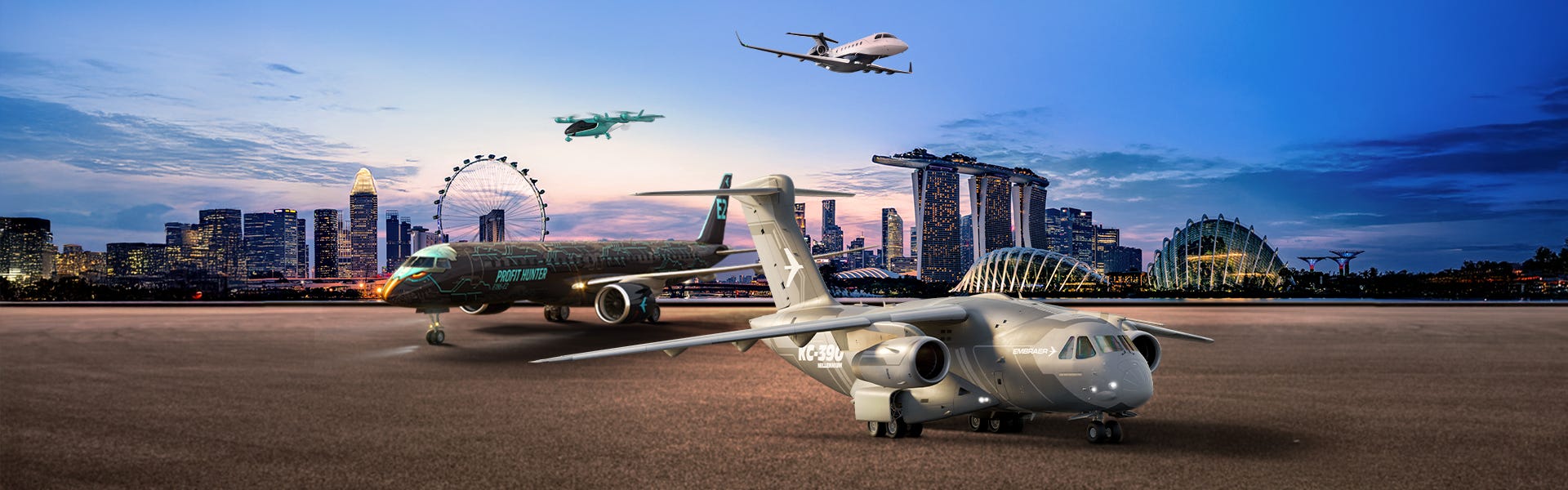
(Photo: Embraer aircraft; courtesy Embraer.)
The location of the main Adani Embraer plant in India is yet to be announced. The partnership is expected to generate “significant direct and indirect employment across engineering, manufacturing, logistics, and support services.” But targets for workforce size and training are yet to be disclosed.
A 2023 Embraer document states that its foreign partnership agreements offer only licensed production and final assembly, with core design intellectual property retained by Embraer. A foreign partner cannot independently design or manufacture a similar aircraft on its own, the document states, without pursuing a separate clean-sheet development program. So far, there is no public information if these Embraer provisions also apply to its partnership with Adani - apart from a mention of “indigenization.”
There is also no public information on other aspects of the Adani–Embraer partnership, including from the Government of India: the total investment by each partner; their ownership share; whether the aircraft will be cheaper than direct imports; and if the venture will enjoy any beneficial tax treatment, financing support, and other subsidies.
The Embraer E175 list price is $50 to $60 million, while actual transaction prices could be lower. At present, most of the roughly 100 small aircraft operated by the private airlines in India are made by Embraer’s competitors, apparently because of cost and other considerations. Hence the airlines will likely purchase the Adani-Embraer aircraft only if the price and other features are attractive, maybe due to tax incentives, low-cost loans and other significant subsidies offered by the Government of India.
Based on 2013 Indian Government policies, commercial losses in business projects are to be borne by private investors. Government investments are indirect and limited to infrastructure support, not equity or for covering operating losses. Will new policies apply to the Adani Embraer partnership on grounds that the government’s goal is strategic? Apparently, the goal is to build domestic aerospace manufacturing capability rather than profitable operations, at least in the short-term.
For the Government of India, the bar to measure the success of the Adani Embraer venture may be very low given past failures of government-funded efforts. In 1989, a government entity launched the GTRE Kaveri program to develop a jet engine for the Tejas Light Combat Aircraft. It suffered technical shortfalls, cost overruns, and failed to meet requirements. It was abandoned in 2008 and so India continues to depend on GE engines imported from the United States. The Kaveri engine program reportedly cost the government more than $2.5 billion.
Then, since the 1990s, the Government-run National Aerospace Laboratories has been trying to build SARAS, a 14 to 19 seat civil aircraft. The project has faced lack of funding, repeated changes in technical specifications, and other problems. So far, more than $300 million is estimated to have been spent on the development and related projects by the Government of India. Current production capacity is effectively zero.
Despite these historical challenges, in November a government official said that SARAS Mk-2, a 19 seat light transport aircraft, is being developed for both civilian and military use. Full commercialization would require several billion dollars in additional investment.
Rising passenger and cargo demand at small city airports in India require more small aircraft. While meeting this demand, it remains to be seen if the Adani Embraer partnership results in transfer of technology which enables Adani to build an indigenous aircraft.
Sunil Mani is a visiting professor, Centre for Development Studies, and Ahmedabad University, both in India. The views expressed are personal.
https://open.substack.com/pub/whisperbyahi/p/traditional-joint-family-to-modern?r=6qs1yx&utm_campaign=post&utm_medium=web&showWelcomeOnShare=true