
From the Kerala Model to the Kerala Question
The first Kerala model widened human capability. The next must generate work, autonomy, ecological security, and opportunity at home says Paul Kattuman.

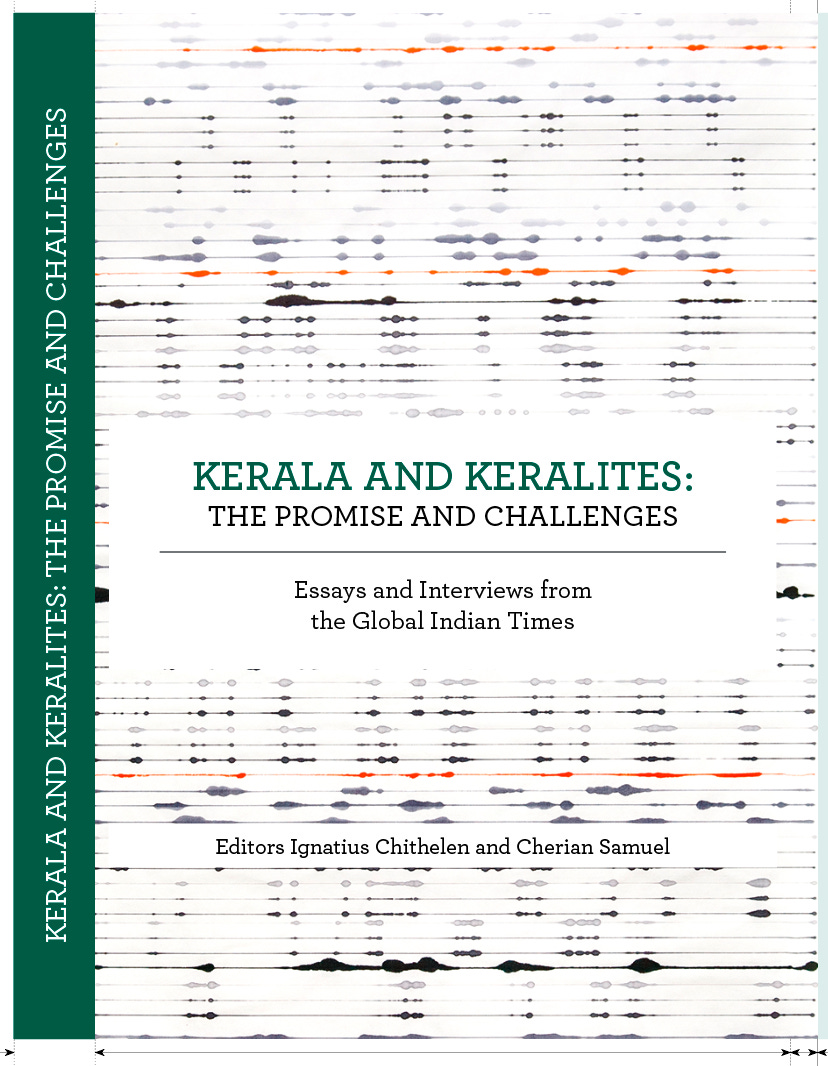
(Book cover: design by Visaskh Menon, based on his painting series Tremors, archival ink on xuan rice paper, 2018-2021.)
By Paul Kattuman
July 11, 2026
This essay is based on Paul Kattuman’s foreword for the book, Kerala and Keralites: The Promise and Challenges, to be published in July 2026. Kattuman is Professor of Economics at Cambridge Judge Business School, University of Cambridge.
Kerala has often been described as a paradox, and with reason. It occupies a place in India’s imagination far larger than its size. Its achievements in literacy, health, social reform, and public action are real. So too are its unresolved difficulties: too few well-paid jobs for educated young people, long dependence on migration, fiscal strain, environmental stress, and a persistent gap between aspiration and opportunity.
The familiar discussion of the ‘Kerala Model’ has focused on how a relatively low-income state achieved remarkably high levels of literacy, life expectancy, and social development. That was the question to which the ideas underpinning the Kerala Model offered an answer. A follow-up question now presses itself upon Kerala: can a society that achieved broad social development convert it into productive work, gender equality, ecological wellbeing and, not least, opportunity at home?
A wide-ranging body of essays, interviews, profiles, and reflections published in Global Indian Times helps us think about that question. Read together, these pieces point to a conversion problem. Kerala widened human capabilities on a broad front, but it has not always created the institutions or economic conditions in which those capabilities can be fully used. The tensions are familiar: education without enough suitable work, migration without adequate protection, welfare without an assured fiscal base, and women’s advancement without corresponding power in the economy and public life.
The articles also suggest that Kerala is best understood as a globally connected society whose boundaries extend beyond the state itself. There is the Kerala of land, institutions, and public policy; the Kerala of families, language, memory, and community life; and the wider Kerala sustained by migrants, remittances, care networks, business ties, and cultural identity.
The story of Kerala is also the story of dispersed people. A worker in the Gulf, a nurse in Europe, a student in Bengaluru, a returnee in Kochi, and an ageing parent in Kottayam are all part of this wider Kerala. Their lives are connected by remittances, care, obligation, memory, and the uneven consequences of migration. Across these different worlds, one question recurs: what can Kerala do to make room for the capabilities its people have acquired?
How Kerala’s achievements were moulded
Kerala’s public image is often cast in terms that are too simple. It is praised as India’s most literate state, a haven of social development, a broadly left-led welfare success, a land of migrant remittances, and a place of relative communal coexistence. All these descriptions contain some truth, but they are by no means the whole truth.
In the Global Indian Times interview Why Kerala Has Higher Literacy and Better Healthcare, P.K. Michael Tharakan resists simple origin stories. Kerala’s high literacy and health indicators did not arise solely from benevolent rulers, missionary education, or modern political mobilisation. They emerged through long processes of change in agriculture and trade, social groups seeking new opportunities, challenges to caste hierarchy, and growing popular demand for education and public institutions. Kerala’s social development was demanded, fought for, and negotiated over time.
In other words, Kerala’s achievements were produced by social pressure. Communities, especially those denied status, wanted education because it brought dignity, mobility, employment, and bargaining power. State schooling, social movements, labour politics, and electoral mobilisation helped create a culture in which literacy and health became expectations.
Writing in Global Indian Times, K.P. Kannan gives this history its sharpest formulation: What Accounts for Kerala’s Spectacular Economic Success and Failures. His description of ‘spectacular successes along with spectacular failures’ captures the record of a highly mobilised society. Public action helped produce literacy, welfare, wages, and accountability. It also left the state and its institutions to mediate strong, competing claims over public finance, land, labour, and political power. The question is whether disagreement can be turned into legitimate decisions and practical compromises.
A Global Indian Times interview with Tirthankar Roy offers a useful corrective to accounts that see only stagnation. Roy argues that Kerala’s recent economic revival has been underestimated. He points to private investment and new businesses in tourism, specialist health care, information technology, manufacturing, and exports. The test is whether these successes can become broad enough to improve the employment prospects of educated people, reduce the pressure to migrate, and strengthen state revenues without deepening ecological strain. Economic growth in Kerala cannot be treated as a purely technical matter. The choices are difficult, and they must pass through politics.
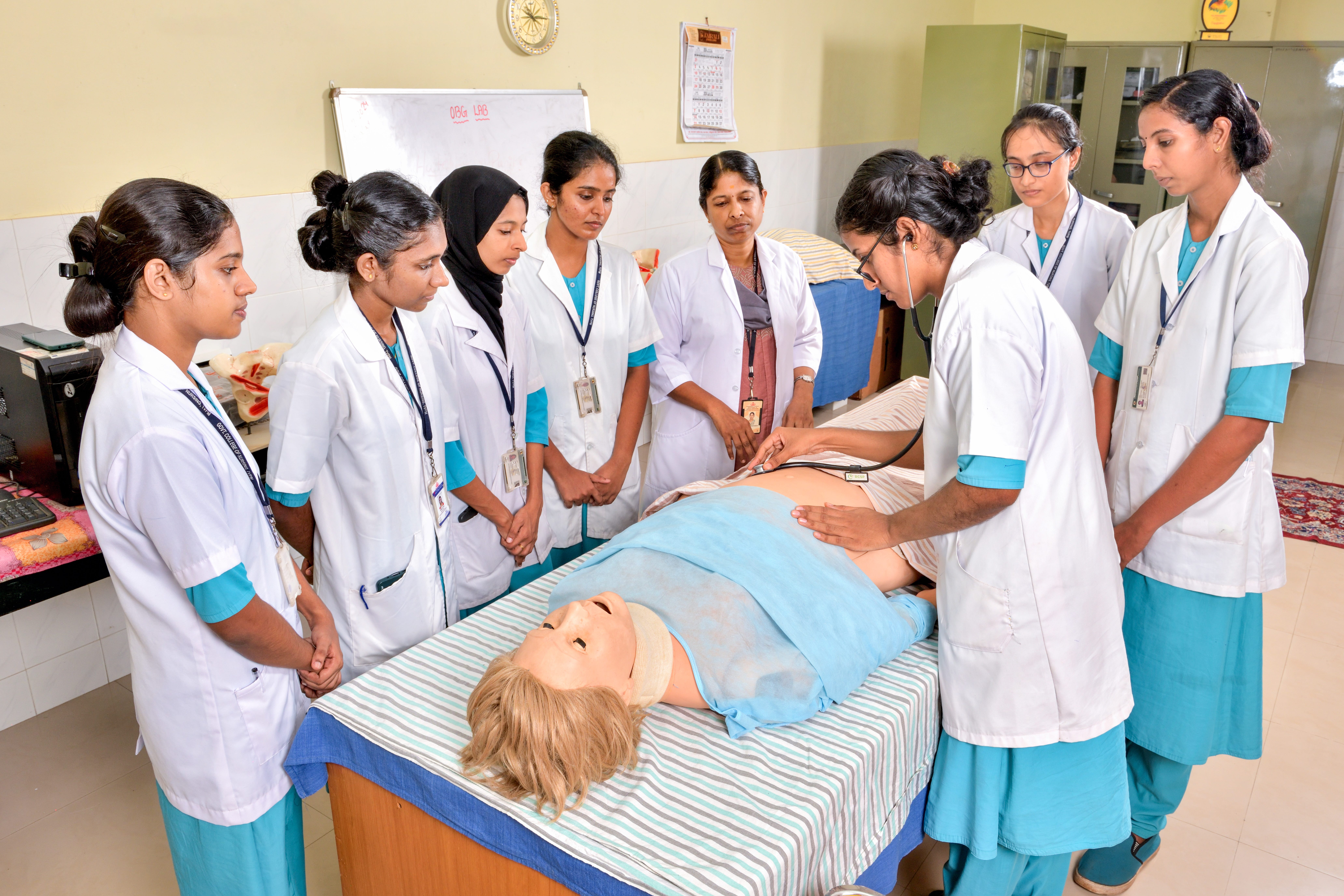
(Photo: students. Courtesy Government College of Nursing, Thiruvananthapuram, Kerala.)
Migration, work, and gender
The essays and interviews on migration and the Arabian Gulf show the urgency of these questions. For more than half a century, migration has been one of Kerala’s most consequential development pathways. It was not designed by a planning body, yet it transformed the state more powerfully than many formal plans. Keralites left for the Gulf and then for countries across the world. Their remittances built houses, educated children, supported parents, expanded consumption, and helped fuel the growth of construction, finance, private education, and health care.
Migration has also carried pain. Cherian Samuel’s account of Indian workers in the Middle East asks whether the Gulf dream can become a nightmare. The answer is clearly yes. Migration can bring income and, in many cases, dignity; it can also bring debt, unsafe work, wage theft, and family separation. Migrant workers are welcomed as economic contributors when money comes home but are too often left alone when the costs of migration become visible. A Global Indian Times reflection on The Goat Life brings those costs into view. A society that depends on migration must treat migrant protection and reintegration as fundamental development questions.
That obligation cannot run in only one direction. Kerala itself depends heavily on workers who have migrated from other Indian states. A credible ethic of migrant protection must extend to them as well as to Keralites working elsewhere.
Sunil Mani’s essay Why Rising Foreign Demand for Nurses Benefits Keralite Women gives migration a crucial gender dimension. Kerala’s investments in education and health helped produce generations of women whose skills are valued around the world. Foreign demand for nurses can open paths to higher income, professional advancement, and independence. Migration is therefore not simply evidence of local failure. International differences in wages, working conditions, and career prospects also matter.
Yet nursing raises a harder question: why must so many highly trained women leave the state to find well-paid work? Why does educated female unemployment remain so high in a society proud of women’s education? Nursing captures one of Kerala’s central gender contradictions. Women’s skills are valued across the world, and their work is indispensable at home, but Kerala still offers too few attractive opportunities for them to work, earn, and make decisions with freedom.
Female literacy, health, and education do not by themselves amount to economic power. Women’s autonomy through work is shaped just as much by everyday conditions of freedom: safety of movement, access to suitable employment, and a fairer distribution of care within families.
Enterprise, technology, and agriculture
The business profiles published in Global Indian Times reveal another kind of mobility: the movement of talent, managerial expertise, and entrepreneurial ambition. They show how people from Kerala and the wider Malayali diaspora have built significant firms and institutions in education, health care, food, technology, and consumer markets.
Kerala’s human capital travels well. Why does more of it not find adequate room within the state? An executive in a global corporation, a nurse in a foreign hospital, an entrepreneur in the Gulf, a small-business founder in an Indian city—what would allow such capabilities to flourish in Kerala? Sunil Mani addresses this directly in Can Kerala Become India’s Next High-Technology Hub. Kerala has an educated workforce, diaspora links, and the social foundations of a knowledge economy. High-technology growth, however, needs more: capital, research networks, regulatory clarity, and a labour environment in which rights and productivity can be reconciled.
Related questions arise in the Global Indian Times essays on agriculture and cash crops. Kerala’s links with the wider world through crops and trade long predate Gulf migration and software. Coconut, rubber, spices, coffee, and shrimp continue to connect producers in Kerala with distant markets, but those connections are fragile.
Coconut cultivation is under pressure from low returns and labour shortages. Rubber growers face imports, volatile prices, and the limits of smallholder production. Spices retain enormous cultural and commercial value, but Kerala cannot rely on a romantic reputation inherited from the past. It must deepen its movement towards quality, branding, and premium markets. Coffee and shrimp point to both the opportunities and the vulnerabilities of global value chains.
Agriculture is one of the places where Kerala’s future will be decided. The reorganisation of cultivation will shape rural livelihoods, food resilience, and the state’s ecological future. Where cultivation is progressively displaced by real estate and remittance-funded consumption, knowledge, landscape, and memory risk being lost. If farming can be made more valuable to those who cultivate, while respecting ecological limits, it can remain a serious part of Kerala’s future.
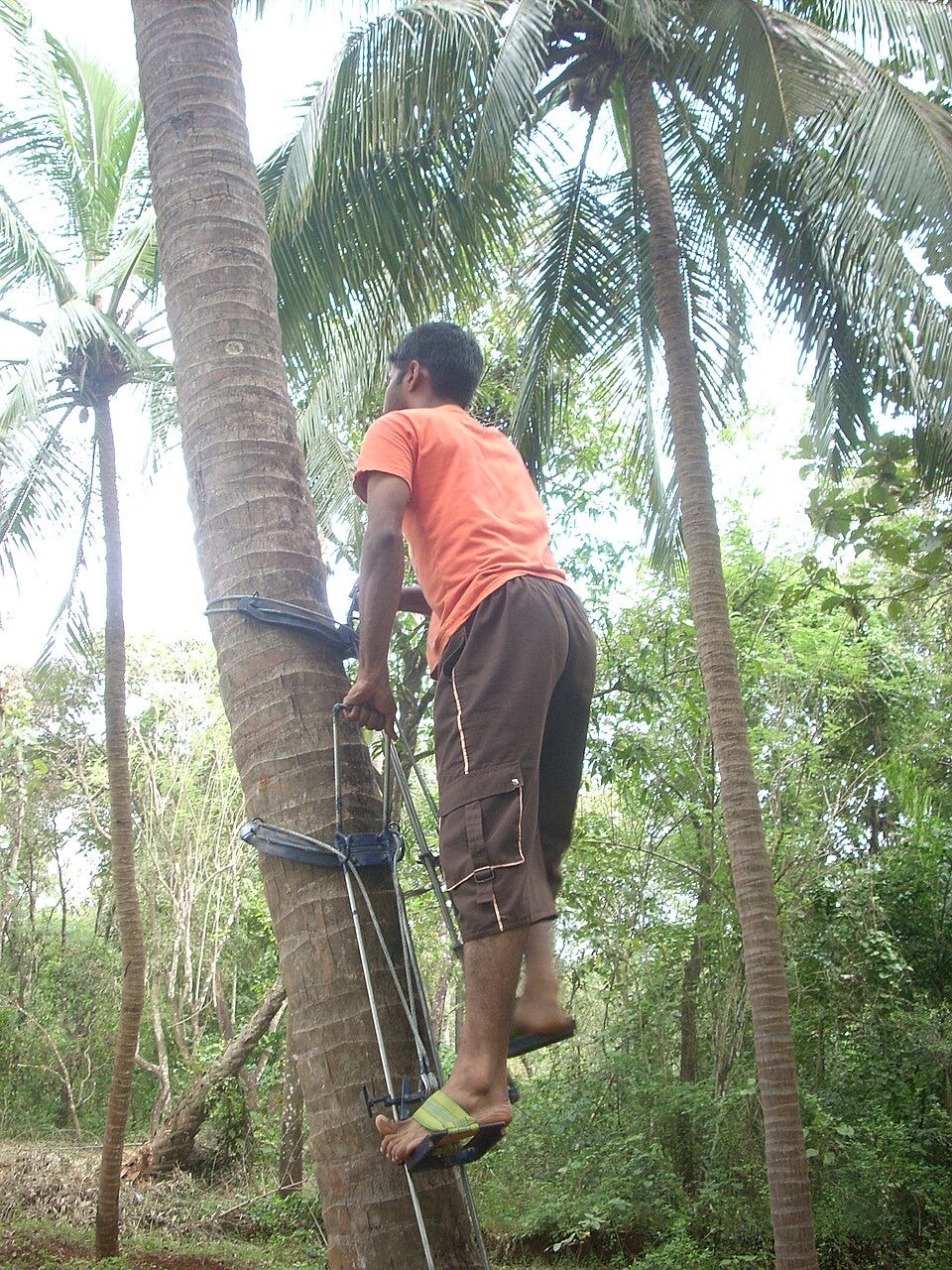
(Photo: A coconut tree climber. Courtesy Wikimedia Commons.)
Culture, democracy, ageing, and climate
The cultural and biographical pieces in Global Indian Times widen the meaning of development. They remind us that Kerala’s promise includes intellectual and cultural life. The essays and reflections on K.N. Raj, founder of the Centre for Development Studies, place him at the intellectual heart of modern Kerala. His importance lies not only in Indian planning and the creation of CDS, but also in the kind of inquiry he encouraged: one that took evidence seriously, understood history, and kept ordinary people within the frame of analysis.
Sunil Mani’s Inspiring Achievements of Keralite Women in Science and Technology might initially appear to sit outside a discussion of development. It belongs within it because Kerala’s promises must ultimately be judged by what they make possible in individual lives. The achievements of Janaki Ammal, Anna Mani, T.K. Radha, and Tessy Thomas show people making lives that earlier generations might not have thought possible. They also carry a caution: exceptional achievement should not be mistaken for equal access. The question remains whether such success can become ordinary rather than remarkable.
The essays on democracy, minority rights, and public debate also belong at the centre of Kerala’s development story. Its achievements have always depended on a noisy and argumentative public sphere in which ordinary people expected to speak and be heard. That is a proud inheritance, but one that needs renewal. A literate society can still constrict dissent. A politically mobilised society can still fail to protect minority and dissenting voices. A society proud of public argument can still treat disagreement as disloyalty. Democratic speech is how a society discovers where it is failing and what it must repair.
In the Global Indian Times interview Mathew Cherian’s Journey from Engineering to Caring for India’s Elderly, Cherian Samuel discusses questions that are especially relevant to Kerala, which is ageing faster than much of India. Migration has changed family structures, and many adult children live abroad or elsewhere in India. Kerala’s success in extending life expectancy now requires arrangements through which old age is not marked by insecurity and loneliness. This too is a gender question, because eldercare often falls on women whose work remains hidden in household accounts and public budgets.
In the Global Indian Times interview India Risks Major Climate Disasters Says Vinod Thomas, Thomas places Kerala within a larger national and global frame. Kerala is not a coal-producing state, but national energy choices and global warming bear directly on its exposure to climate shocks. Climate resilience cannot consist only of emergency action after floods and landslides. It must shape decisions about where Kerala builds, how it protects fragile land, and how public investment is justified.
The next Kerala Model
A central argument emerges from these varied contributions. Kerala’s old strengths remain real, but they are not enough. The next Kerala Model must grow from the first while confronting what the first left unresolved. The first model widened human capability; the next must carry that capability into work, autonomy, ecological security, and opportunity at home.
Education must lead to work consistent with people’s aspirations. Migration must become less a necessity imposed by limited opportunity and more a protected choice. Kerala must make it possible for more people to imagine a future with dignity within the state. That requires institutions through which migrant savings can find productive uses and returning migrants’ skills and experience can be put to work. It also requires an economy that gives people confidence to take risks, build enterprises, and remain connected to Kerala whether they live within it or elsewhere.
Read together, the essays, interviews, profiles, and reflections published in Global Indian Times ask us to look at Kerala plainly: as a society of real achievements and serious contradictions. The Kerala Question is no longer whether human development matters. It is whether Kerala can turn human development into secure livelihoods, greater autonomy for women, environmental security, and a future that more people can imagine within Kerala itself.
A personal map of Kerala
These questions are personal to me. I was born and raised in Kerala, but it was at Sainik School, Trivandrum, which I joined when I was ten, that my sense of the state widened beyond my own town. The school’s deepest gift was friendship. My classmates came from villages and towns across Kerala, from Kasaragod to Thiruvananthapuram. Through them, Kerala ceased to be just the place I was from and became a larger, more varied social world—many accents, backgrounds, beliefs, and local worlds, all made memorable through the daily revelry of friendship.
Decades later, during the COVID-19 pandemic, one of those school friends, Rajeev Sadanandan, brought me into Kerala’s public health response. Rajeev, who as Additional Chief Secretary for Health had helped guide the state through the Nipah outbreak and was then adviser to the Chief Minister, asked me to contribute district-level infection forecasts. Week after week, I did that work from my Cambridge office. In technical terms, it involved statistical estimation under uncertainty. But no district was ever merely a unit in a dataset. Each name summoned a friend, a family known through years of stories, and a village I felt I knew despite never having lived there. The map I was studying was also, inescapably, a map of friendship and memory.
That experience continues to shape how I think about Kerala and the questions raised by these Global Indian Times contributions. It reminds me that the Kerala Model is ultimately an account of people’s lives and of the institutions that open or close possibilities. My personal map of Kerala still shapes the questions I ask: whether public policy reaches ordinary lives, whether institutions can respond to old and new pressures, and whether Kerala can build on its achievements without mistaking them for guarantees. These questions concern the future people will be able to build in Kerala—and their ability to remain part of Kerala’s future wherever they live.
About the author
Paul Kattuman is Professor of Economics at Cambridge Judge Business School, University of Cambridge, and Director of Studies in Management and a Fellow of Corpus Christi College. His research focuses on econometric methods and applied modelling, particularly in public health, the space economy, and the Indian economy. During the COVID-19 pandemic, his work with Andrew Harvey contributed to operational forecasting in the UK and India, particularly Kerala. He is an Associate Editor of the Harvard Data Science Review, is affiliated with the Centre for India and Global Business, and serves as Academic Advisor to the Space Economy Initiative at Cambridge Judge Business School.